South Africa, officially the Republic of South Africa (RSA), is the southernmost country in Africa.
Overview
| Official name: | Republic of South Africa (RSA) |
| Largest city: | Johannesburg |
| Official languages: | 12 languages: – Afrikaans – English – Ndebele – Sepedi – Sesotho – Setswana – Swazi – Tshivenda – Xhosa – Xitsonga – Zulu – South African Sign Language |
| Ethnic groups: | – Black: 81.7% – Coloured: 8.5% – White: 7.2% – Indian or Asian: 2.6% |
| President: | Cyril Ramaphosa |
| Deputy president: | Paul Mashatile |
| Parliament: | 490 seats |
| Speaker of the National Assembly: | Thoko Didiza |
| Chairperson of the National Council of Provinces: | Refilwe Mtsweni-Tsipane |
| Chief Justice: | Mandisa Maya |
| Area: | 1,220,813 km² (471,359 sq mi) |
| Population: | 63,015,906 people (2024 Mid-Year Estimates) |
| Population density: | 51.6/km² (133.7/sq mi) |
| GDP (PPP): | – Total: 1.030 trillion (2025 estimate) – Per capita: $16,010 |
| GDP (nominal): | – Total: $418.05 billion (2025 estimate) – Per capita: $6,520 |
| Life expectancy: | 66.5 years |
| Currency: | South African rand (ZAR) |
| Time zone: | UTC+2 (SAST) |
| Date format: | Short formats: – yyyy/mm/dd – yyyy-mm-dd |
| Calling code: | +27 |
| ISO 3166 code: | ZA |
| Internet TLD: | .za |
Facts about South Africa
- The first successful human heart transplant was perfomed in Cape Town, South Africa at Groote Schuur Hospital.
- South Africa was the first country to voluntarily dismantled its nuclear weapons program
- South Africa’s Bloukrans Bridge hosts the highest natural bungee jump in the world.
- An app developed in South Africa calculates the number of cows to pay for a bride’s dowry.
Etymology
Etymology has to do with the origin and evolution of the name “South Africa”.
The name “South Africa” is derived from the country’s geographic location at the southern tip of Africa.
During its formation, the country was named the Union of South Africa in English and Unie van Zuid-Afrika in Dutch, reflecting its origin from the unification of four British colonies.
Since 1961, the long formal name of the country in English has been the “Republic of South Africa” and Republiek van Suid-Afrika in Afrikaans.
The country has 11 official names in all its official languages except South African Sign Language.
South Africa is also commonly known as, “Mzansi”, a colloquial (informal or casual) name derived from the Xhosa noun uMzantsi meaning “south”.
Some Pan-Africanist political parties prefer the term “Azania”.
Geography
As the name suggests, South Africa is located on the southernmost tip of Africa, with a coastline that stretches more than 2,500 kilometres (1,553 miles) and along two oceans (the Indian and South Atlantic).
South Africa’s breath-taking beauty is among the most sought after in the world as the country is endowed with rich forestry, vast desert plains, and majestic mountainous terrains.
At 1,221,037 square kilometres (471,445 square miles), South Africa is the 24th-largest country in the world.
South Africa is bordered by the Republic of Namibia to the northwest, the Republics of Botswana and Zimbabwe to the north, the Republic of Mozambique to the northeast, Eswatini to the east and Lesotho landlocked in the southeast.
People
Ethnic Groups
Government-determined “racial” and ethnic classification, embodied in the Population Registration Act in effect from 1950 to 1991, was crucial in determining the status of all South Africans under apartheid.
The act divided South Africans at birth into four “racial” categories namely; White, Black, Coloured (mixed race), and Asian – though these classifications were largely arbitrary, based on considerations such as family background and cultural acceptance as well as on appearance.
The original Khoekhoe and San peoples of South Africa scarcely exist as distinct groups inside South Africa today. Many intermarried with other African peoples who arrived before European conquest, and others intermarried with Malagasy and Southeast Asian slaves under white rule to form the majority of the Coloured population.
Bantu-speaking Africans entered the area from the north roughly 1,800 years ago, and their descendants today constitute more than three-fourths of South Africa’s population.
Below is a table highlighting South Africa’s ethnic composition as of 2024;
| Ethnic Group | 2024 | 2022 | 2011 | 2001 | 1996 |
|---|---|---|---|---|---|
| Black | 81.7% | 81.4% | 79.2% | 79.0% | 77.4% |
| Coloured | 8.5% | 8.2% | 8.9% | 8.9% | 9.0% |
| White | 7.2% | 7.3% | 8.9% | 9.6% | 11.0% |
| Indian or Asian/other | 2.6% | 3.1% | 3.0% | 2.5% | 2.6% |
The population formerly classified as Coloured descended from Khoisan (Khoekhoe and San) peoples, slaves imported by the Dutch from Madagascar and what are now Malaysia and Indonesia, Europeans, and Bantu-speaking Africans.
Several distinct subethnic groups can still be identified, such as the Malays, who largely originated from Indonesian Muslim slaves, and the Griquas, who trace their origins to a specific historical Khoekhoe community.
While some Griquas and Malays still to identify themselves as Coloured, others who were so classified by the apartheid government have rejected the label entirely. In many respects they cannot be distinguished physically or culturally from the white population.
Those formerly classified as Coloured are concentrated in the western half of the country, particularly in the Northern and Western Cape provinces and the westernmost parts of Eastern Cape province, where they form a majority in most districts.
South Africans of Indian descent, who were classified under apartheid as Asian, form a minority. They went to South Africa originally as indentured workers imported by the British to the former Natal colony beginning in the 1850s and were followed by a smaller group of immigrant traders later in the 19th century. Most of them now live in KwaZulu-Natal and to a small extent in Gauteng, Mpumalanga, and Limpopo provinces.
The majority of white South Africans are descendants of European settlers – primarily from Great Britain, the Netherlands, and Germany – who began migrating to South Africa in the mid-17th century.
Languages
South Africa has 12 official languages: Zulu, Xhosa, Afrikaans, English, Pedi, Tswana, Southern Sotho, Tsonga, Swazi, Venda, and Southern Ndebele (in order of first language speakers), as well as South African Sign Language which was recognised as an official language in 2023.
Other languages are spoken, or were widely used previously, including Khoe, Northern Ndebele, Fanagalo, Nama, Lobedu, and Phuthi.
Majority of the unofficial languages of the Khoekhoe and San peoples contain regional dialects stretching northwards into Botswana and Namibia, and elsewhere. These people, who are a physically distinct population from the Bantu people who make up most of the Black Africans in South Africa, have their own cultural identity based on their hunter-gatherer societies. They have been marginalised, and the remainder of their languages are in danger of becoming completely extinct.
White South Africans may also speak European languages, including Dutch, Italian, German, Greek, Portuguese (also spoken by black Angolans and Mozambicans), and French, while some Indian South Africans and more recent migrants from South Asia speak Indian languages, such as Gujarati, Hindi, Tamil, Telugu, and Urdu.
Religion
The majority of South Africans are Christians. The largest established Christian denominations directly rooted in European settlement but now drawing members from all ethnic groups are the Methodist, Anglican, Roman Catholic, and Dutch Reformed churches.
The Christian category also includes Zion Christian and Pentecostal (Charismatic).
South Africa’s population also includes Muslims, Hindus, traditional African religions, and Judaism. There is also a small percentage of South Africa’s population that has no religious affiliation.
There are an estimated 200,000 traditional healers, and atleast 50% of South Africans consult these healers, generally called sangoma (‘diviner’) or inyanga (‘herbalist’). These traditional healers use a combination of ancestral spiritual beliefs and a belief in the spiritual and medicinal properties of local fauna, flora, and funga commonly known as muti (‘medicine’), to facilitate healing in clients.
South African Muslims comprise mainly Indians and Coloureds. They have been joined by black or white South African converts in addition to those from other African countries.
Population
South Africa has a population of about 63,015,904 people (as of 2024) of diverse cultures, origins, languages, and religions. The last census was held in 2022, with estimates produced on an annual basis.
As of 2025, South Africa is home to an estimated 20 million illegal immigrants, most of whom come from neighbouring Zimbabwe, Lesotho, Eswatini, and Mozambique.
South Africa is also infested with millions of illegal Nigerians who who arrive on tourist visas but never return to their home country. Majority of these Nigerians are involved in crimes that include selling narcotics and counterfeit goods, hijacking, kidnapping people, scamming, armed robberies, sexual violence, human trafficking, forgery, and taking peoples lives.
South Africa also has a signficant number of illegal immigrants from the Democratic Republic of the Congo, Malawi, Zambia, Ghana, Angola, Somalia, Botswana, Pakistan, Nambia, India, Tanzania, Gabon, Uganda, and Eastern Europe.
Government
South Africa is a parliamentary republic, but unlike most such republics, the president is both head of state and head of government and depends for their tenure on the confidence of Parliament.
The executive, legislature, and judiciary are all subject to the supremacy of the Constitution of South Africa, and the superior courts have the power to strike down executive actions and acts of Parliament if they are unconstitutional.
The National Assembly, the lower house of Parliament, consists of 400 members and is elected every five years by a system of party-list proportional representation. The National Council of Provinces, the upper house, consists of 90 members, with each of the nine provincial legislatures electing ten members.
After each parliamentary election, the National Assembly elects one of its members as president; hence the president serves a term of office the same as that of the Assembly, normally five years. No president may serve more than two terms in office. The president appoints a deputy president and ministers (each representing a department) who form the cabinet.
The National Assembly may remove the president and the cabinet by a motion of no confidence.
In the most recent election, held on 29 May 2024, the African National Congress (ANC) lost its majority for the first time since the end of Apartheid, winning only 40% of the vote and 159 seats, while the main opposition, the Democratic Alliance (DA), won 22% of the vote and 87 seats. uMkhonto weSizwe, a new party founded by former President and ANC leader Jacob Zuma, won 14.6% of the vote and 58 seats, while the Economic Freedom Fighters (EFF), founded by Julius Malema, former president of the ANC Youth League (ANCYL) who was later expelled from the ANC, won 9.5% of the vote and 39 seats.
After the election, the ANC formed a Government of National Unity (GNU) with the Democratic Alliance and several smaller parties.
South Africa has no legally defined capital city. The fourth chapter of the constitution states “The seat of Parliament is Cape Town, but an Act of Parliament enacted in accordance with section 76(1) and (5) may determine that the seat of Parliament is elsewhere.”
Capitals
South Africa’s three branches of government are split over different cities.
Cape Town, as the seat of Parliament, is the legislative capital.
Pretoria, as the seat of the president and cabinet, is the administrative capital.
Bloemfontein is the seat of the Supreme Court of Appeal, and has traditionally been regarded as the judicial capital, although the highest court, the Constitutional Court of South Africa has been based in Johannesburg since 1994.
Administrative divisions
South Africa is divided into nine provinces namely; the Eastern Cape, Free State, Gauteng, KwaZulu-Natal, Limpopo, Mpumalanga, North West, Northern Cape, and Western Cape.
Each of the nine provinces is governed by a unicameral legislature, which is elected every five years by party-list proportional representation.
The legislature elects a premier as head of government, and the premier appoints an Executive Council as a provincial cabinet. The powers of provincial governments are limited to topics listed in the constitution; these topics include such fields as education, health, transport, and public housing.
The nine provinces are in turn divided 8 metropolitan and 44 district municipalities. The district municipalities are further subdivided into 205 local municipalities.
The metropolitan municipalities, which govern the largest urban agglomerations, perform the functions of both district and local municipalities.
| Province | Provincial Capital | Largest City | Area (km²) | Population (2024) |
|---|---|---|---|---|
| Eastern Cape | Bhisho | Gqeberha | 168,966 | 7,176,230 |
| Free State | Bloemfontein | Bloemfontein | 129,825 | 3,044,050 |
| Gauteng | Johannesburg | Johannesburg | 18,178 | 15,931,824 |
| KwaZulu-Natal | Pietermaritzburg | Durban | 94,361 | 12,312,712 |
| Limpopo | Polokwane | Polokwane | 125,755 | 6,402,594 |
| Mpumalanga | Mbombela | Mbombela | 76,495 | 5,057,662 |
| North West | Mahikeng | Klerksdorp | 104,882 | 4,155,303 |
| Northern Cape | Kimberley | Kimberley | 372,889 | 1,372,943 |
| Western Cape | Cape Town | Cape Town | 129,462 | 7,562,588 |
| TOTAL | 1,220,813 | 63,015,906 |
Military
The South African National Defence Force (SANDF) was created in 1994 as a volunteer military composed of the former South African Defence Force, the forces of the African nationalist groups, uMkhonto weSizwe (MK) and Azanian People’s Liberation Army (APLA), and the former Bantustan defence forces.
The SANDF is subdivided into four branches, the South African Army, the South African Navy, the South African Air Force, and the South African Military Health Service.
In 2022, South Africa spent US$3.069 billion on its armed forces which is about 0.86% of the nation’s entire GDP. Over the years, defence expenditure has been cut as the nation currently faces no external military threats.
The South African Army is the largest branch of the South African National Defence Force (SANDF), focusing on land warfare. Established in 1912, it is one of the oldest armies in Africa and has a long history of involvement in peacekeeping missions, counter-insurgency operations, and regional defence.
The South African Air Force (SAAF), with its headquarters in Pretoria, is the aerial warfare branch and is responsible for protecting South Africa’s airspace, supporting ground forces, and conducting humanitarian and peacekeeping operations.
Established in 1920, the South African Air Force is one of the oldest air forces in the world.
The South African Air Force operates around 230 aircraft including fighter jets, training jets, helicopters, and combat drones. Notable aircraft of the SAAF include the advanced JAS-39 Gripen multi-role fighter jet and the South African-made Denel Rooivalk attack helicopter.
The South African Navy (SA Navy), headquartered at Simon’s Town Naval Base, the largest naval facility in Africa, is the naval warfare branch and is responsible for protecting South Africa’s vast coastline, securing maritime trade routes, and conducting peacekeeping and anti-piracy operations.
The South African Navy operates a well-equipped and modern fleet of vessels. Some of the key naval assets include the Heroine-class attack submarines and the Valour-class stealth guided-missile frigates making the South African Navy one of the most capable navies on the African continent.
The South African Military Industry is the most advanced in Africa and one of the most advanced in the world. As of 2020, South Africa is the world’s 24th largest arms exporter, the only country in Africa.
The South African Military industry is made up of several major companies that specialize in various aspects of military manufacturing, ranging from shipbuilding and aerospace to armored vehicles and weapon systems as well as missile and radar systems.
Some of the main companies in South African military innovation include, Armscor, BAE Systems South Africa, Denel, Milkor, Paramount Group, and Sandock-Austral.
South Africa is the only country in Africa to have successfully developed nuclear weapons. It became the first country (followed by Ukraine) with nuclear capability to voluntarily renounce and dismantle its programme and in the process signed the Nuclear Non-Proliferation Treaty in 1991.
Economy
The economy of South Africa is Africa’s largest, most industrialised and technologically advanced. It also has a relatively high gross domestic product (GDP) per capita compared to other countries in sub-Saharan Africa US$16,080 at purchasing power parity as of 2023 ranked 95th.
However, South Africa is still burdened by a relatively high rate of poverty and unemployment and is ranked in the top ten countries in the world for income inequality.
South Africa is ranked 40th by total wealth, making it the second wealthiest country in Africa. South Africa has a private wealth of $651 billion making South Africa’s population the richest in Africa followed by Egypt with $307 billion and Nigeria with $228 billion.
Approximately 55.5% (30.3 million people) of the population is living in poverty at the national upper poverty line while a total of 13.8 million people (25% of the population) are experiencing food poverty.
After 1994, government policy brought down inflation, stabilised public finances, and some foreign capital was attracted; however, growth was still below expectations. From 2004 onward, economic growth picked up significantly; both employment and capital formation increased.
During the presidency of Jacob Zuma, the South African government increased the role of state-owned enterprises (SOEs). Some of the biggest SOEs are Eskom, the electric power monopoly, South African Airways (SAA), and Transnet, the railroad and ports monopoly.
Some of these SOEs have not been profitable, such as SAA, which has required bailouts totaling R30 billion ($2.03 billion) over the 20 years preceding 2015.
The main international trading partners of South Africa – besides other African countries – include China, the United States, Germany, Japan, Spain, and the United Kingdom.
The agricultural industry in South Africa contributes approximately 10% of formal employment, relatively low compared to other parts of Africa, as well as providing work for casual labourers and contributing around 2.6% of GDP for the nation. Due to the aridity of the land, only 13.5% can be used for crop production, and only 3% is considered high potential land.
Mining
Mining has been a major component of South Africa’s economy throughout its history.
Until 2006, South Africa had been the world’s largest gold producer for almost a century. By the end of 2009, gold mining in South Africa had declined rapidly, having produced 205 metric tons (mt) of gold in 2008 compared to 1,000 metric tons produced in 1970 (almost 80% of the world’s mine supply at the time).
Despite this, South Africa still has 6,000 tonnes of gold reserves and is ranked number 10 in gold production whilst remaining a supplier of a wide range of important mineral resources.
South Africa is home to the world’s deepest gold mine, Mponeng Gold Mine, reaching nearly 4000m depth.
South Africa is the world’s largest producer of platinum, chrome, vanadium, manganese, and vermiculite.
South Africa is the second largest producer of palladium, zirconium, ilmenite, and rutile as well as being the world’s third largest coal exporter.
The country is also a major producer of iron ore and in 2012, it overtook India to become the world’s third-biggest iron ore supplier to China, the world’s largest consumers of iron ore.
Tourism
South Africa is a major global tourist destination, with the tourism industry accounting for 3.3% of the country’s GDP as of May 2025, according to Statistics South Africa (Stats SA).
In 2024, South Africa experienced a growth in tourism numbers, with combined passenger arrivals through its various ports of entry increasing to 8.92 million people.
According to the World Travel & Tourism Council (WTTC), the tourism industry directly supports 10.3% of South Africa’s employment.
In early 2025, approximately 1.8 million people were employed in South Africa’s tourism sector, and this number is expected to grow significantly over the coming few years.
South Africa offers both domestic and international tourists a wide variety of options, among others the picturesque natural landscape and game reserves, highly regarded wines and diverse cultural heritage.
Some of the most famous destinations include several national parks, such as the expansive Kruger National Park in the northern region of the country, the coastlines and beaches of the Western Cape and KwaZulu-Natal provinces, and the major cities of Johannesburg, Cape Town, Durban, and Pretoria.
Education
South Africa has a three-tier system of education starting with primary school, followed by high school, and tertiary education in the form of (academic) universities and universities of technology.
Learners have twelve years of formal schooling, from grade 1 to 12. Grade R, or grade 0, is a pre-primary foundation year. Primary schools span the first seven years of schooling. High school education spans a further five years.
The National Senior Certificate examination takes place at the end of grade 12 and is necessary for tertiary studies at a South African university.
Public universities are divided into three types: traditional universities, which offer theoretically oriented university degrees; universities of technology (formerly called technikons), which offer vocationally-oriented diplomas and degrees; and comprehensive universities, which offer both types of qualification.
There are 23 public universities in South Africa: 11 traditional universities, 6 universities of technology, and 6 comprehensive universities.
There are also a large amount of FET (Further Education and Training) and TVET (Technical and Vocational Education and Training) colleges in South Africa.
Under apartheid, schools for black people were subject to discrimination through inadequate funding and a separate syllabus called Bantu Education which only taught skills sufficient to work as labourers.
In 2004, South Africa started reforming its tertiary education system, merging and incorporating small universities into larger institutions, and renaming all tertiary education institutions “university”.
By 2015, 1.4 million students in higher education had been aided by a financial aid scheme (NSFAS) which was promulgated in 1999.
The adult literacy rate in 2025 was 95%. This was the second-highest in Africa, behind only Seychelles.
Infrastructure
Though not perfect, South Africa has a relatively well developed infrastructure compared to majority of countries on the African continent.
Roads
South Africa has a total road network of 750,000 kilometres, the largest of any African country.
According to SANRAL, South Africa’s road network is valued at more than R2.1 trillion.
SANRAL manages national roads and has a network of 22,197 kilometres of paved roads.
Provinces are responsible for 222,951 kilometres while, according to the Department of Transport (DoT), the municipal network is estimated at 275,661 kilometres of the proclaimed network. The rest are unproclaimed gravel roads (mainly serving rural communities) and are therefore not owned or maintained by any road authority.
The provincial road network is about 222,951 kilometres in length, consisting of 170,837 kilometres of unpaved and 52,114 kilometres of paved roads.
Railways
Rail transport in South Africa is an important element of the country’s transport infrastructure. All major cities are connected by rail.
PRASA operates commuter services while Transnet Freight Rail mainly operates freight services.
State-owned utility Transnet Freight Rail is the largest freight rail transport operator in Africa, the company maintains a rail network of approximately 31,000 kilometres but only 20,900 kilometres of this are in use.
South Africa’s railway system is the most developed and largest in Africa as well as the 13th largest in the world; however, vandalism, theft, and underinvestment has left the overall condition of the majority of networks in a poor state.
Freight, passenger and port capacity shortages remain a severe constraint in domestic and regional trade. Coal and iron ore are mainly transported on these lines.
Airports
South Africa has international airports in six cities: Cape Town, Johannesburg, Durban, Gqeberha, Mbombela, and Kimberley.
As of 2021, South Africa had 407 airports, making it the leading country in Africa in terms of airport ownership and the country ranked 20th globally.
The four major airports in South Africa are: Cape Town International Airport, O.R. Tambo International Airport in Johannesburg, King Shaka International Airport in Durban, and Chief Dawid Stuurman International Airport in Gqeberha.
Energy
South Africa has a very large energy sector and is the only country in Africa that possesses a nuclear power plant (the Koeberg Nuclear Power Station).
South Africa is the largest producer of electricity in Africa and it ranks 21st globally. The country is also the 7th largest coal producer in the world and produces in excess of 248 million tonnes of coal and consumes almost three-quarters of that domestically.
Around 77% of South Africa’s energy needs are directly derived from coal and 92% of coal consumed in Africa is mined in South Africa. South Africa is also the world’s 14th largest emitter of greenhouse gases.
South Africa’s primary electricity generator is Eskom, the utility is the largest producer of electricity in Africa, and is among the top 7 utilities in the world in terms of generation capacity and among the top 9 in terms of sales. Eskom is the largest of South Africa’s state owned enterprises.
Eskom generates approximately 95% of electricity in South Africa and operates several notable power stations, including the Koeberg Nuclear Power Station in Cape Town, Kendal Power Station, the largest dry-cooled power station in the world, as well as Duvha Power Station which became the first power station in the world to be retrofitted with pulse jet fabric filter plants.
Transport
The modes of transport in South Africa include roads, railways, airports, water, and pipelines for petroleum oil.
Most people in South Africa use informal minibus taxis as their primary mode of transport. Bus rapid transit has been implemented in some cities in an attempt to provide more formalised and safer public transport services.
The country has several major ports including Durban, Cape Town, and Port Elizabeth that allow ships and other boats to pass through, some carrying passengers and some carrying petroleum tankers.
Science and technology
South Africa is the origin of several important scientific and technological developments. The country was ranked 69th in the Global Innovation Index in 2024.
The first human-to-human heart transplant was performed by cardiac surgeon Christiaan Barnard at Groote Schuur Hospital in Cape Town in December 1967.
Other South Africans who have significantly contributed to the science and technology field are; Allan MacLeod Cormack who pioneered the X-ray computed tomography (CT scan), Max Theiler who developed a vaccine against yellow fever, and Aaron Klug who developed crystallographic electron microscopy techniques as well as Mark Shuttleworth who founded an early Internet security company Thawte.
South Africa has cultivated a burgeoning astronomy community. The country is home to the Southern African Large Telescope, the largest optical telescope in the Southern Hemisphere.
Water supply and sanitation
The water sector in South Africa has two distinctive features namely; the policy of free basic water and the existence of water boards, which are bulk water supply agencies that operate pipelines and sell water from reservoirs to municipalities.
The above-mentioned features have resulted to serious problems concerning the financial sustainability of service providers, leading to a lack of attention to maintenance.
The eastern parts of South Africa suffer from periodic droughts linked to the El Niño weather phenomenon.
In early 2018, Cape Town, whose weather patterns are different to the rest of the country, faced a water crisis as the city’s water supply was forecatsed to run dry before the end of June. Water-saving measures were in effect that required each citizen to use less than 50 litres (13 US gal) per day. Cape Town rejected an offer from Israel to help it build desalination plants.
Sports
South Africa is a reknown sporting nation with sport playing an important role in the country’s culture, the most famous sports are football, cricket, and rugby.
Other sports with significant support are athletics, boxing, swimming, golf, tennis, netball, mixed martial arts, basketball, ringball, surfing, and field hockey.
Association football is the most famous sport in South Africa. Footballers who have played for major foreign clubs include Steven Pienaar, Lucas Radebe, Philemon Masinga, Benni McCarthy, Aaron Mokoena, and Delron Buckley.
South Africa hosted the 2010 FIFA World Cup, and FIFA president Sepp Blatter awarded South Africa a grade 9 out of 10 for successfully hosting the event.
South Africa also hosted the 1996 African Cup of Nations, with the national team Bafana Bafana going on to win the tournament.
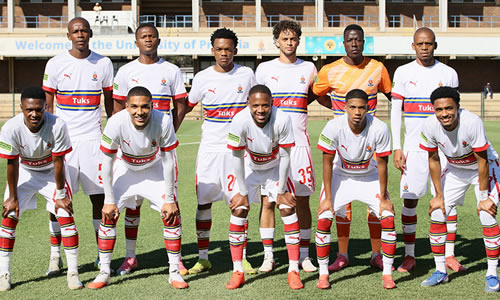
South Africa’s men’s U-20 team also won the 2025 U-20 Africa Cup of Nations.
In 2022, the women’s team also won the Women’s Africa Cup of Nations, beating Morocco 2–1 in the final. The women’s team went on to reach the last 16 at the 2023 FIFA Women’s World Cup, beating Italy and tying with Argentina in the group stage.
Famous combat sport personalities include Baby Jake Jacob Matlala, Vuyani Bungu, Welcome Ncita, Dingaan Thobela, Corrie Sanders, Gerrie Coetzee, Brian Mitchell, Garreth McLellan and current UFC Middleweight Champion Dricus du Plessis.
Durban surfer Jordy Smith won the 2010 Billabong J-Bay Open making him the highest ranked surfer in the world.
South Africa produced Formula One motor racing’s 1979 world champion Jody Scheckter. Famous active Grand Prix motorcycle racing personalities include Brad Binder and his younger brother Darryn Binder.
Famous active cricket players include Kagiso Rabada, David Miller, Keshav Maharaj, Quinton de Kock, Lungi Ngidi, Marco Jansen, Aiden Markram, and Faf du Plessis.
South Africa has produced numerous world class rugby players, including Francois Pienaar, Joost van der Westhuizen, John Smit, Os du Randt, Jean de Villiers, Chester Williams, Frans Steyn, Victor Matfield, Bryan Habana, Tendai Mtawarira, Eben Etzebeth, Cheslin Kolbe and Siya Kolisi.
South Africa has won the Rugby World Cup four times, the most wins of any country. South Africa first won the 1995 Rugby World Cup, which it hosted. They went on to win the tournament again in 2007, 2019 and 2023.
Cricket is one of the most played sports in South Africa. The country hosted the 2003 Cricket World Cup, the 2007 World Twenty20 Championship.
South Africa’s national cricket team, the Proteas, won the inaugural edition of the 1998 ICC KnockOut Trophy by defeating West Indies in the final.
The 2023 ICC Women’s T20 World Cup was hosted in South Africa and the women’s team won silver.
The men’s team won silver at the 2024 ICC T20 World Cup, and won the 2023–2025 ICC World Test Championship, beating Australia in the final.
South Africa’s national blind cricket team also went on to win the inaugural edition of the Blind Cricket World Cup in 1998.
South Africa is ranked 2nd in the ICC Men’s Test Rankings, and ranked 4th in the ICC Women’s ODI Rankings with a rating of 103.
In 2004, the swimming team of Roland Schoeman, Lyndon Ferns, Darian Townsend and Ryk Neethling won the gold medal at the Olympic Games in Athens, simultaneously breaking the world record in the 4×100 Freestyle Relay.
Penny Heyns won Olympic Gold in the 1996 Atlanta Olympic Games, and more recently, swimmers Tatjana Smith, Lara van Niekerk, Akani Simbine and Wayde van Niekerk have all broken records and won medals at both the Olympic and Commonwealth Games, with Wayde van Niekerk being the world record holder in 400 metres since 2016.
In 2012, Oscar Pistorius became the first double amputee sprinter to compete at the Olympic Games in London.
Gary Player is regarded as one of the greatest golfers of all time, having won the Career Grand Slam, one of five to have done so.